 English
 Español
 Pусский
 العربية


Painel leve e resistente ao calor
A lightweight heat resistant panel is a modern engineered material designed to provide effective thermal protection while keeping overall weight to a minimum. It is widely used in environments where both heat resistance and structural efficiency are important. By combining low density with stable performance under high temperatures, this type of panel offers a practical solution for many industrial, commercial, and transportation applications.The main advantage of a lightweight heat resistant panel is its ability to reduce heat transfer without adding unnecessary mass. Traditional heat shielding materials can be bulky and heavy, which may limit design flexibility and increase installation difficulty. In contrast, a lightweight panel helps improve handling, simplifies assembly, and supports energy-efficient system design. This makes it especially valuable in equipment, vehicles, machinery enclosures, building protection systems, and specialized technical installations.These panels are typically manufactured using advanced composite structures, ceramic-based materials, mineral cores, or other thermally stable formulations. Their internal design is often optimized to create low thermal conductivity while maintaining mechanical strength. Some panels are also developed with layered structures to enhance insulation, impact resistance, and dimensional stability. As a result, they can perform reliably in demanding conditions where exposure to heat, flame, or thermal cycling is frequent.Another important feature is durability. A high-quality lightweight heat resistant panel is expected to maintain its shape and performance even after repeated exposure to elevated temperatures. It should resist warping, cracking, or degradation, ensuring long-term usability. In many applications, additional properties such as moisture resistance, corrosion resistance, and chemical stability are also beneficial. These characteristics help extend service life and reduce maintenance requirements.The versatility of this type of panel is another key benefit. It can be cut, shaped, and installed in different formats depending on project requirements. Whether used as internal lining, external shielding, partitioning, or insulation support, the panel can be adapted to various design needs. Its lightweight nature also makes it suitable for applications where reducing load is important, such as in transport systems or modular structures.From a performance perspective, lightweight heat resistant panels help improve safety by limiting heat propagation and protecting surrounding components or surfaces. This can reduce the risk of damage, enhance operational reliability, and support compliance with thermal safety standards. In energy-related applications, they may also contribute to improved insulation efficiency, lowering heat loss and supporting better temperature control.Aesthetic and practical considerations can also be addressed, as many panels are available in smooth, textured, or customized finishes. Depending on the intended use, they may be designed for clean appearance, easy maintenance, or enhanced surface protection. This makes them suitable not only for technical environments but also for spaces where appearance matters.Overall, a lightweight heat resistant panel combines thermal protection, reduced weight, durability, and versatile usability in one solution. It is an ideal material for modern applications that demand efficient heat management without compromising ease of installation or structural performance.
Produto
Categoria:
-
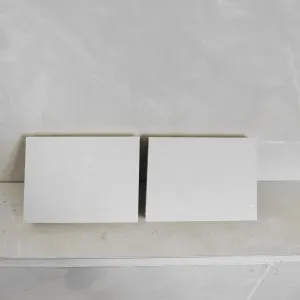
Placa de baixa densidade e resistente a altas temperaturas
Sua classificação: Placa de baixa densidade e resistente a altas temperaturasVistas: 183Número:Tempo de liberação: 2026-07-17 11:58:00A placa de baixa densidade resistente a altas temperaturas é um painel estrutural leve com excelente isolamento térmico e desempenho anti-altas temperaturas. Mantém sua forma física estável, sem deformações, bolhas ou rachaduras, mesmo sob condições extremas de alta temperatura por longos períodos. O material apresenta baixo peso, facilitando o transporte e a instalação, além de ótima resistência à corrosão e ao fogo. É amplamente utilizado em revestimentos de equipamentos, divisórias com isolamento térmico, decoração de fornos industriais e projetos de construção em ambientes de alta temperatura, garantindo uso seguro e duradouro.
Notícias
Categoria:
Nenhum resultado de pesquisa!
Caso
Categoria:
Nenhum resultado de pesquisa!
Vídeo
Categoria:
Nenhum resultado de pesquisa!
Download
Categoria:
Nenhum resultado de pesquisa!
Recrutamento
Categoria:
Nenhum resultado de pesquisa!
Produtos recomendados
Nenhum resultado de pesquisa!



 Whatsapp
 Telefone
 Correspondência